The Great Migration & Ndutu Experience
Five days on the calving plains — Ndutu, the Southern Serengeti and Ngorongoro, in the season when the plains are full.
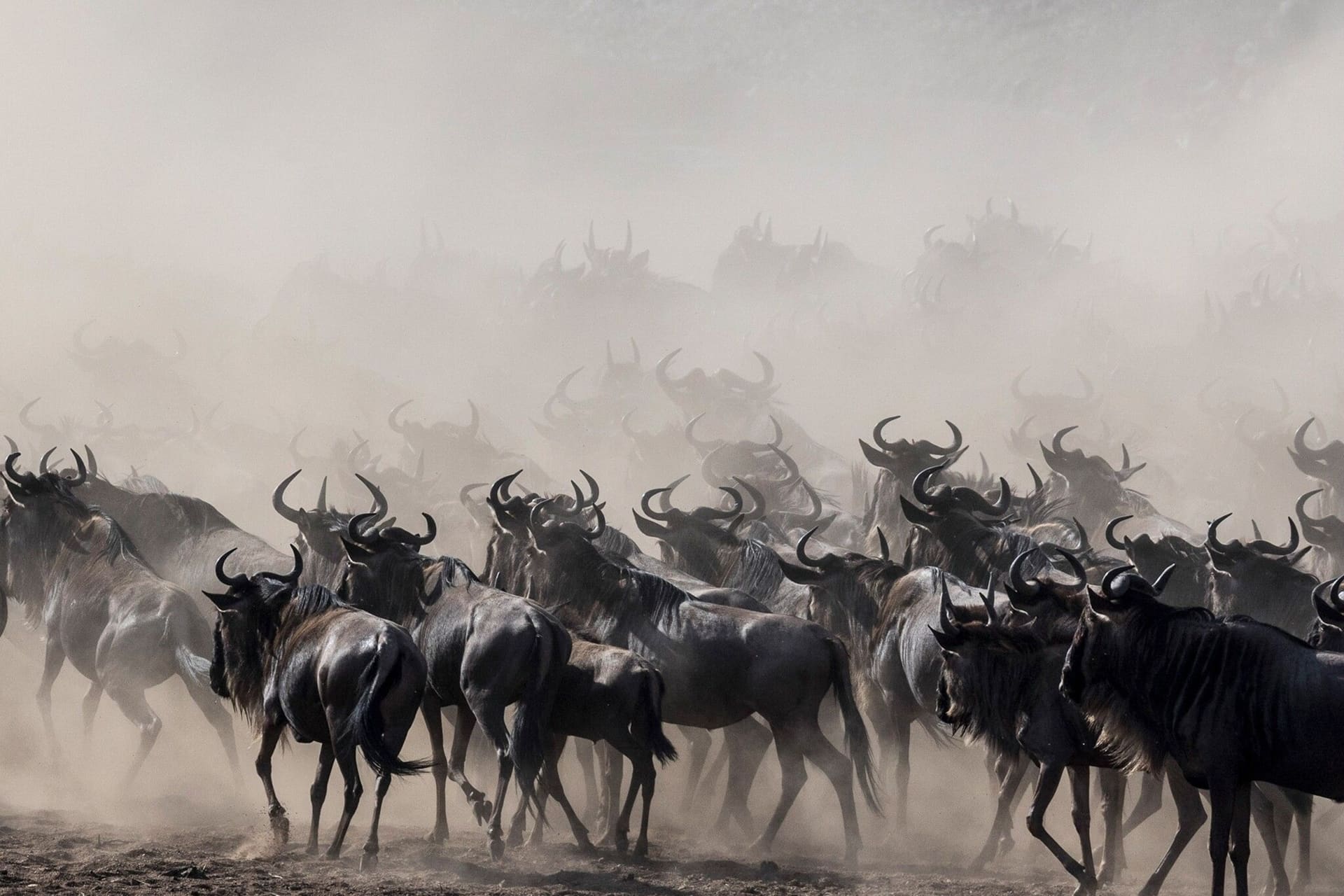
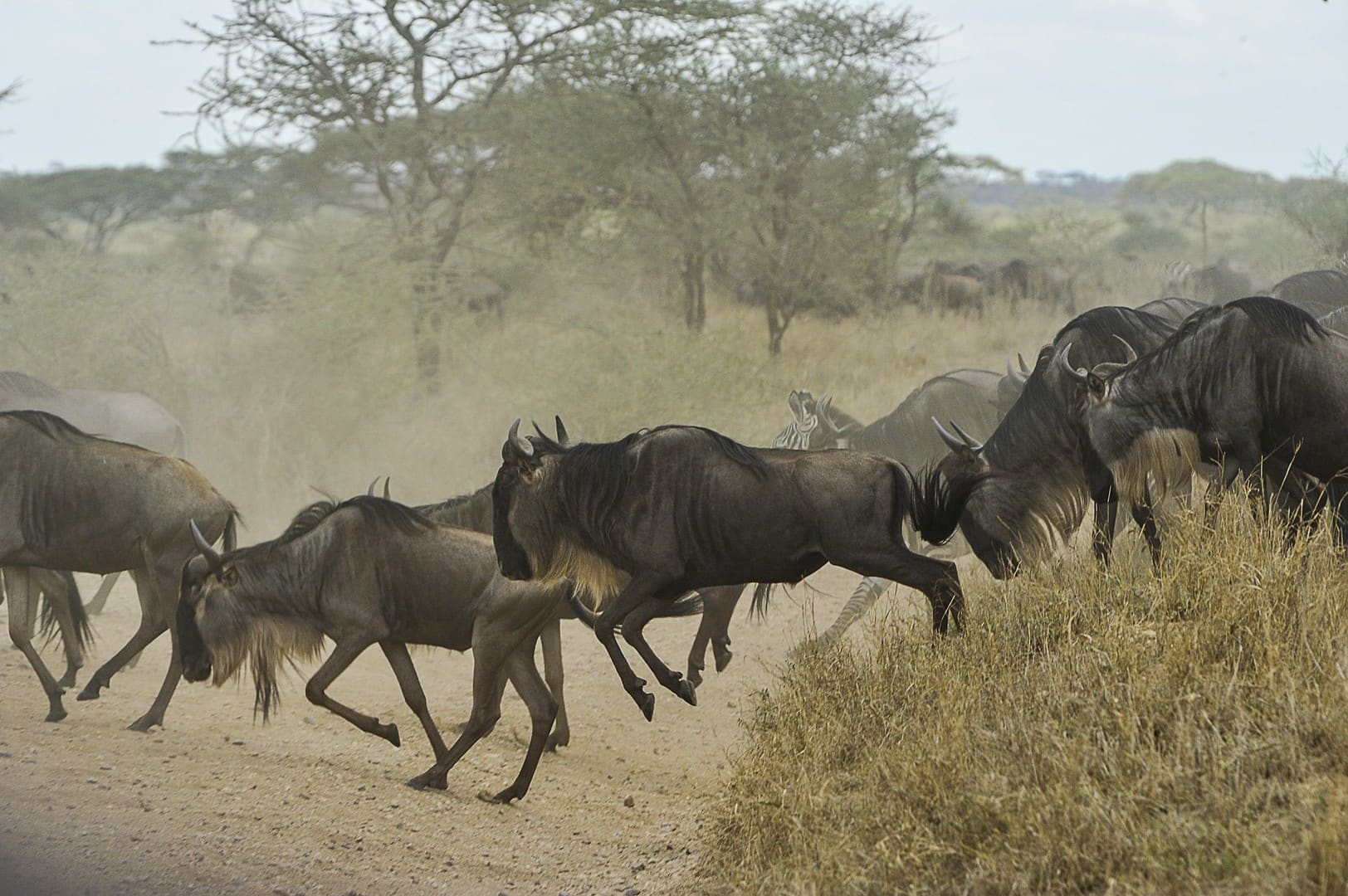
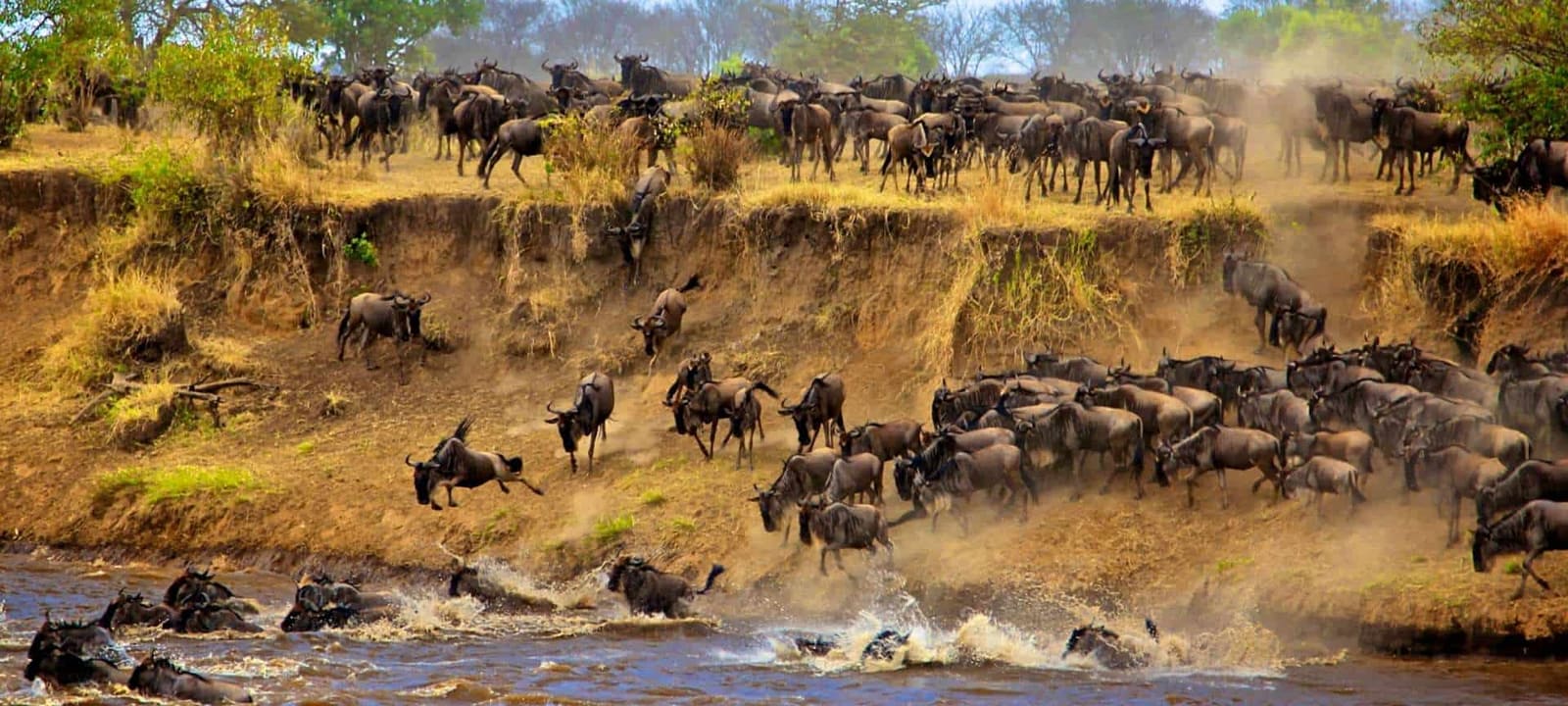
Between January and March the Southern Serengeti and the Ndutu plains host one of the most remarkable events in the natural world: the wildebeest calving season, when hundreds of thousands of wildebeest gather on the short-grass plains and some eight thousand calves are born in a single peak day. This five-day itinerary is built around that window — and around the photography it makes possible. The safari starts early from Moshi, crossing the Rift Valley and the Ngorongoro highlands to reach the Ndutu plains, where two nights of game driving put you among the herds at first light, day after day. The appeal is not just numbers. Calving season concentrates predators: cheetah families hunt the open ground in daylight, lion prides follow the herds' edges, and hyena clans patrol between the maternity groups, so wildlife viewing may include some of the most dramatic predator–prey interactions of the safari year. Your guide reads rainfall, grass length and the daily movement reports to position the vehicle, because the herds follow the rain and no one can guarantee their exact location on a given date — we promise effort, positioning and patience rather than a fixed scene. From Ndutu the route moves north into the central Serengeti for a further full day among the kopjes and riverlines of the Seronera valley, where resident lion, leopard and cheetah carry the sightings whatever the migration is doing, before the journey closes with a dawn descent into the Ngorongoro Crater — a fitting final act, six hours in the densest big-game arena in Africa. This safari suits wildlife photographers, nature enthusiasts and returning safari travelers who want the green-season Serengeti at its most intense: short grass, enormous skies, newborn wildlife and a fraction of the peak-season vehicle traffic. Accommodation will be selected according to availability and your preferred style, typically small tented camps positioned close to the plains. January–March is generally associated with the Southern Serengeti / Ndutu calving season, but exact wildlife locations vary with seasonal conditions.
- 01Two nights on the Ndutu plains during the January–March calving window
- 02Full days positioned by your guide around rainfall, grass and herd movements
- 03Predator-rich green season: cheetah, lion and hyena following the herds
- 04A further full day in the central Serengeti's big-cat country
- 05Closes with a dawn descent into the Ngorongoro Crater
How the days move.
Moshi → Ndutu / Southern Serengeti
Ndutu / Southern Serengeti
You leave Moshi early — this is the longest transfer of the safari and every hour of daylight on the plains is worth buying back. The road drops through Maasai steppe to the Rift Valley floor at Mto wa Mbu, climbs the escarpment's switchbacks and traverses the Ngorongoro highlands, where the air cools and the farmland turns mist-green around Karatu. Beyond the highlands the country opens onto the short-grass plains of the Serengeti ecosystem, and from the Naabi area onward game viewing begins in earnest, with the vehicle already in wildlife country when you stop for a picnic lunch. By mid-afternoon you reach Ndutu, where the season (January–March) gathers the wildebeest herds and their newborn calves onto the plains. The afternoon is spent game driving among the herds and the lakes — with opportunities to see cheetah on the open ground, hyena at the herd edges and enormous numbers of wildlife against a horizon-wide sky — before dinner and overnight at a camp in the Ndutu area.
L/D · Tented camp, Ndutu area
Full day on the Ndutu plains
Ndutu / Southern Serengeti
A full day on the calving plains with no transfers, guided entirely by the wildlife. You set out at first light, when the grass is silver with dew and the predators are finishing the night's hunting, and the morning may hold newborn wildebeest on unsteady legs, cheetah families on the termite mounds, or lion prides dozing at the herd edges — with the plains' enormous skies and short grass making every sighting photogenic. Your guide tracks rainfall and daily movement reports, because the herds follow the green grass and wildlife locations vary with seasonal conditions; the game-drive route stays flexible, working the lakes, marshes and woodland edges wherever the morning's reports point. Midday is a picnic breakfast or brunch in the shade, followed by a slow loop toward Lake Masek or the marshes where hippo, giraffe and elephant add variety to the plains species. In the afternoon the light softens and the herds drift again — the second game drive of the day closes with a sunset over the plains before dinner and a second night at your Ndutu camp.
B/L/D · Tented camp, Ndutu area
Ndutu → Central Serengeti
Serengeti National Park
One more early game drive on the Ndutu plains — the last morning with the herds and often the calmest light of the trip — then breakfast and the road north into the Serengeti proper, game viewing from the first kilometre. The drive itself is a moving safari: the short-grass plains give way to the kopjes and riverlines of the Seronera valley, and the day's sightings accumulate as you go. A picnic lunch is taken en route, and by afternoon you are exploring the central Serengeti's riverline habitat, where resident wildlife carries the season: lion prides on the rocky outcrops, leopard in the sausage trees along the river, cheetah on the open grass and elephant moving through the woodlands. Depending on seasonal wildlife movements, migratory herds may also be present in the area, and your guide will adapt the route according to current conditions and sightings. Arrive at your camp in the central Serengeti for dinner and overnight, with the night sounds of the river valley around you.
B/L/D · Tented camp or lodge, central Serengeti
Full day Serengeti → Ngorongoro area
Serengeti → Ngorongoro Conservation Area
The morning is a final, generous game drive in the central Serengeti — early light on the kopjes, a last pass along the riverlines, and whatever the radio network turns up; wildlife viewing may include lion, leopard, cheetah, hippo, elephant and large resident giraffe populations. After a picnic lunch the route turns south, retracing the short-grass plains toward the Ngorongoro Conservation Area, with the road itself offering sightings as it crosses wildlife country most of the way. The land rises through the highlands as the afternoon cools, and by late afternoon you arrive at your lodge on the crater rim or in the Karatu highlands, positioned for tomorrow's dawn descent. The evening is for ticking through the trip's sightings with your guide over dinner and an early night — the crater waits at sunrise, and its six hours on the floor are best met rested.
B/L/D · Lodge, Ngorongoro rim or Karatu highlands
Ngorongoro Crater → Moshi
Ngorongoro Conservation Area → Moshi
You descend into the Ngorongoro Crater at dawn, ahead of the day visitors, and the next six hours deliver a compressed greatest-hits of African wildlife: open grassland, the Lerai forest, flamingo-fringed soda lakes and permanent swamps, with wildlife viewing that may include black rhino, elephant bulls, buffalo, hippo and the crater's famously large lion prides — all inside a caldera whose 600-metre walls frame every photograph. A picnic lunch is taken at a designated site on the crater floor, often beside the hippo pool, before the track climbs back to the rim in the early afternoon. The road home runs through Maasai country and the highlands toward Moshi, arriving in the late afternoon or early evening in time for onward travel or a final night at your hotel. After five days on the calving plains and the big-cat country of the Serengeti, the crater's density feels like a closing argument — and the safari ends beneath Kilimanjaro, where it began.
B/L · —
FROM THE PLAIN
The safari in pictures.
Press any photo to open it full-screen.
THE FINE PRINT
What the price covers.
Clear terms, no surprises on the mountain or the plain — every trip is quoted privately, per departure.
In the price
- All park, conservation and crater service fees
- Private 4x4 safari vehicle with roof hatch and charging ports
- Dedicated professional safari guide throughout
- Full-board accommodation in carefully selected safari lodges and tented camps
- Unlimited mileage game drives in a private vehicle
- Bottled drinking water on game drives
- AMREF Flying Doctors evacuation cover while on safari
- All government taxes and VAT
Not included
- International flights and Tanzanian visas
- Travel insurance (mandatory for all guests)
- Gratuities for your guide and camp staff
- Premium brand drinks at lodges and camps
- Optional activities such as hot-air balloon flights and Maasai cultural visits
- Items of a personal nature
Before you ask.
Will the herds be in Ndutu when we travel?+
January–March is generally associated with the Southern Serengeti / Ndutu calving season, but exact wildlife locations vary with rainfall, grazing and herd movements. Your guide tracks the herds daily and will adapt the route according to current conditions — the safari follows the wildlife, never a fixed promise.
Why travel in the green season?+
The plains are green and dramatic skies roll over short grass; the game viewing is exceptional, the light is superb for photography, and vehicle numbers are far below the June–October peak. It is the connoisseur's Serengeti.
Is this safari suitable for non-photographers?+
Absolutely — the itinerary is simply a superb game-viewing safari in the best green-season window. Photographers get early starts, open sightlines and patient positioning; everyone else gets the same wildlife in one of the most beautiful seasons of the year.